Kip Jones

KIP JONES, an American by birth, has been studying and working in the UK for more than 20 years.
Under the umbrella term of 'arts-led research', his main efforts have involved developing tools
from the arts and humanities for use by social scientists in research and its impact on a wider
public or a Perfomative Social Science.

Jones was Reader in Performative Social Science and Qualitative Research at
Bournemouth University for 15 years.
He is now a Visiting Scholar and and an independent author and scholar.

Kip has produced films and written many articles for academic journals and authored chapters
for books on topics such as masculinity, ageing and rurality, and older LGBT citizens.
Jones' most recent work involves working with Generation Z youth to tell their stories using
social media.
His ground-breaking use of qualitative methods, including Auto-fiction, biography
and auto-ethnography, and the use of tools from the arts in social science research
and dissemination are well-known.

Jones acted as Author and Executive Producer of
the award-winning short film, RUFUS STONE, funded by Research Councils UK.
The film is now available for free viewing on the Internet
and has been viewed by more than 14,000 people in 150 countries.

Areas of expertise
• Close relationships, culture and ethnicity
• Social psychology, sociology
• Ageing, self and identity
• Interpersonal processes, personality,
individual differences,
social networks, prejudice and stereotyping
• Sexuality and sexual orientation
• Creativity and the use of the
arts in Social Science

Media experience
His work has been reported widely
in the media, including:
BBC Radio 4,BBC TV news,Times
Higher Education, Sunday New
York Times, International
Herald-Tribune
and The Independent.

Friday, 4 April 2014

Title tittle-tattle

“The writer is always tricking the reader into listening to the dream.” —Joan Didion

Dear Tweedledum and Tweedledee*, I see via Google citation alert that you mention two of my articles in your recent piece about titles. ... What was your title?


"Some papers have interesting and/or catchy titles, perhaps more so in the social sciences than in health journals. Sometimes these catchy titles are just too cryptic, for example from ‘On a train Morgantown: A film script’ 11 and from the same author ‘How Did I Get to Princess Margaret? (And How Did I Get Her to the World Wide Web?)’12 . For both papers one needs to read the paper to understand the title. So before suggesting a funny title, remember that articles with funny titles are less cited than more traditional ones as an analysis of papers published in psychology journals suggested".
I would suggest that both my mentioned titles are creative rather than simply cryptic. I am not sure that I would categorise the titles as 'funny' either. The point of a creative title is to attract an audience, in spite of your opinions. I explained my choice of the title for 'On a Train from Morgantown', actually, right in the article:
 "I had always had the film, "Caught on a Train" by Stephen Poliakoff, in mind when writing the original script and wanted to continue with a similar sort of visual evocation for the written form" (Jones, 2011).
"On a Train from Morgantown" was an invited article for a prestigious psychology journal special issue about Kenneth Gergen.  It has been widely read  (i.e., read more than the average three times with 50 views on just one repository). (The paper has been cited 31 times in the eight years since publication) The fact that it is a film script published in an academic psychology journal is a major breakthrough for dissemination of Performative Social Science. This innovation in communication of arts-based research was acknowledged in an article about its publication in Times Higher Education and on several blog sites. The title was never questioned by either the journal editor or the Times reporter.

I took umbrage at your use of the word "funny" (twice, in close proximity to one another) to describe my titles because 'The One about Princess Margaret" was, ironically, always meant to be humorous. The word "funny", however, can connote "odd" or "inappropriate" or "misplaced", something your article then goes on to try to substantiate. I wrote about the careful choice of the title in the first version of Princess Margaret, again, in the article:
"The title ("The One about Princess Margaret") itself is a play on the titles for “Friends” episodes (e.g., “The One Where Rachel Finds Out”) and humorous stories (“Have you heard the one about …?”). I wanted the production to be clearly placed within the genre of popular culture, but reinvent it for an academic setting" (Jones, 2006).
"Princess Margaret" is very much a body or portfolio of work supporting the original video production. These follow-up textural outputs produce a trail, trace or map of methodological underpinnings and production values for a Performative Social Science output via video. The title varies from publication to publication, journal articles to book chapters. "The One about Princess Margaret" was published originally as a journal article (21 citations so far), then invited as two separate book chapters, including the *offending* title,"How Did I Get to Princess Margaret? (And ow Did I Get Her to the World Wide Web?)". This means the title went past at least four editors and several reviewers, but you know better. The article describes the project background and includes the script for the original audio visual production. The video itself has been viewed about 500 times in four years on various sites and in classrooms worldwide, the whole point of writing the article and chapters in the first place.

The fact that both of these articles may be used more as inspiration for further development in arts-based research and not simply to spawn citations in subsequent journal articles is a point missed by a 'citation only' impact approach.  Both articles open up possibilities for alternative ways of expressing and disseminating research in any 'subject' area; impact beyond the page, in other words. The final impact is with the readers, audiences and communities to whom Performative Social Science efforts are directed. They make the final judgements.

Nonetheless, as I work to further disseminate my work through social media outlets, I am finding that even the "funny" titles are not always catchy enough and further work needs to be done to develop short descriptions or titles to attract a very fast-moving and attention-limited audience gaze, even amongst academics. Developing 'tag lines' (a device from film distribution) etc. for articles is a whole new approach with which I am currently experimenting. 'Intriguing' rather than 'cryptic' is certainly my watchword in these endeavours.

Perhaps if your article had explored these kinds of developments in publication and dissemination rather than desperately trying to find examples for your scorn,  it would have been more 'interesting'. As it stands, it is pretty basic textbook fodder. I mostly skimmed it because, on your advice, I knew what it said already by the title.

Cheers,
Kip

PS: "'The Bridges of Madison County'.  Huh? What's dat? Why would I want to read/see somethin' called that?"
PPS: Please feel free to send my reply along to the long list of 'authors' of your article.

*A response to a journal article by two of my colleagues at my university which cited two of my articles as  examples of bad journal article titles.
 
Resources:
 
Jones, K. (2011) “On a train from Morgantown: A filmscript”. Psychological Studies (Springer). DOI 10.1007/s12646-011-0123-9
 
Jones, K. (2012) “Short Film as Performative Social Science: The Story Behind "’Princess Margaret’". Ch. in Popularizing Research, P. Vannini, Ed. New York: Peter Lang Publishing.

Jones, K. (2009) “How Did I Get to Princess Margaret? (And How Did I Get Her to the World Wide Web?)” Ch. in M. Srinivasan & R. Mathur (Eds.), Ethnography and The Internet: An Exploration. Nagarjuna Hills, Punjagutta, India: ICFAI University Press.  

Jones, K. (2007) “The one about Princess Margaret” Forum: Qualitative Social Research Special Issue on Virtual Ethnography 8: 3 (Sept 2007).
.
How_did_I_get_to_Princess_Margaret_-FQS

 "The One About Princess Margaret"-Script-FQS

Jones, K. (2006) "The one about Princess Margaret" (Video) 
 

Monday, 17 March 2014

ARTS in RESEARCH (AiR) Collaborative forms at Bournemouth University


Bournemouth University has a growing community of Arts in Research (AiR) academics and post-grad students.  This effort grows out of the experience of the School of Health and Social Care’s ReThink process and previous work at HSC in using tools from the Arts in carrying out research, disseminating findings and sharing them with students, colleagues and communities beyond the University. The AiR team would like to join up with researchers in any School with an interest or even curiosity in how they might infuse their interest in the arts within more routine research and/or presentation practices.

The interest in Arts-based Research is international and growing. Areas such as video, film, photography, dance, drama, poetry, radio production, creative writing—even clowning—are becoming more mainstream.  Conferences, for example, no longer routinely consist of hour-after-hour packed with 20-minute PowerPoint presentations. Young students balk at PPT and expect more creativity from lecturers in their learning experiences. Reaching wider audiences (including ‘service-users’ and the public) is now routinely demanded by funding bodies. Tools from the Arts can greatly enhance all of these efforts.

Using Arts-based approaches in research requires thinking about Method from novel viewpoints. Involving research participants in producing outputs frequently enlivens projects, for one example. Finding the right arts-based method for the research questions or findings is key to their use. Finding the right collaborator for your project can be central to its success.

AiR researchers began meeting in January (watch for future announcement by email, Facebook and Twitter).  There is already interest in developing a series of workshops with working artists as facilitators.  No need to feel that great personal skill is required, just enthusiasm! We hope to open the collaboration up to others outside of BU through future events and workshops.
“Selfies” by some of the AiRHeads collaborating on ARTS in Research (click on photo to enlarge)
 Pictured (top to bottom, left to right): Anne Quinney, (HSC); Sue Thomas (Visiting Scholar); Kip Jones (HSC & Media School); Michele Board (HSC & BUDI); Bronwen Thomas (Media School); Wendy Cutts (HSC); Wendy Couchmann (Southbank U); Michelle Cannon (Media School); Jen Leamon (HSC); Carolyn Ellis-Hill & “Dylan” (HSC); Louise Oliver (HSC); Lee-Ann Fenge (HSC); Karen Cooper (HSC); Trevor Hearing (Media School); Julian McDougall [with Billy Bragg] (Media School); Rebecca Edwards (BU R&KE).

Sunday, 9 March 2014

Bournemouth University's Centre for Qualitative Research Refreshes Website


The Centre for Qualitative Research (CQR), a long-standing resource for research practice and postgraduate learning at BU, has recently undergone a ‘refit’ of its web pages.  Content from the old site has been moved over to the new platform for Bournemouth University groups and centres. The new format now makes it possible to link with work taking place in other Schools and research sites. In addition, Impact, Public Engagement and Postgraduate Research links feature on every page.


UPDATE! CQR has received approval to continue as a Research Centre within Bournemouth University.  Kip Jones will act as Centre Director, with Caroline Ellis-Hill acting as Deputy Director. The Centre will be part of the new Department of Health Sciences & Public Health in the Faculty of Health & Social Sciences. Members are welcome from across departments and faculties at BU.

 
CQR is held in high esteem globally for its innovative work and commitment to qualitative research. The refreshed web pages provide an international ‘shop window’ for CQR, School of Health & Social Care and BU more generally in regards to cutting-edge qualitative work. CQR has always engaged across Schools at BU and welcomes new opportunities for collaborate efforts.

The new CQR pages include information, resources and links organised around the following areas of research:
In addition, areas such as Biographic Narrative Interpretive Research, Cut-up Technique and Appreciative Inquiry are covered. A new page outlining the ‘Gay and Pleasant Land? Project and Rufus Stone’ has been added. The recently organised, cross-Schools ARTS in RESEARCH (AiR) collaboration is also featured.

The new web pages include new information and resources, links to further information and even videos for viewing pleasure! Last but not least, a photo has been added as a ‘Featured Image’ highlighting the essence of each page.

Have a look around this interesting site!


Monday, 10 February 2014

The Look of Love


Lifelong friends
One last reunion
Shady Slim and Jimmy James.

They call you “Doctor Doctor”
Never knowing
It saved you from burning.

(Playing Doctors and Nurses:
“Feeling bad” and “Make it better”
That’s all it ever took).

[Felini sets the scene in black and white.]

Spiny ridge with sea both sides.
Down to the dunes and crashing water.
(The storm is always approaching).

Niche in the sand carved by wind.
Just enough space to shelter three.
Parasoled extras paraded by.

Alone at first
As you prefer it. Always
Waiting to be found.

Man with ugly donkey
That nuzzles you.
You retreat into the recess.

Jimmy shows you shiny 8 X 10s.
Shady Slim’s band
Posed on weathered wood.

Nothing special
Except the layout
Which is Malevichian.

Then Shady Slim’s
Typed out lyrics with
Corrections penned in Peacock:
     “He likes
     The look of love
     Like you”.

They like the look of love like you.

Monday, 23 December 2013

Research as Fiction: “The Return of Rufus Stone” by Kip Jones*


A four-year research project at Bournemouth University, “Gay and Pleasant Land?—a study about positioning, ageing and gay life in rural South West England and Wales”, took place as part of the Research Councils UK-funded New Dynamics of Ageing Programme on ageing in 21st Century Britain. The key output of this effort was the short professionally made, award-winning film RUFUS STONE1. I acted as Project Lead and Author and Executive Producer for the film. The research project’s methods included narrated biography, visual ethnography, auto-ethnography, focus group work and theatrical improvisation of interview data.
 
In the process of refining the treatment for the film, the Director (Josh Appignanesi) and I faced several obstacles revolving around plot. If the premise was that Rufus would return to his boyhood village after 50 years in exile, there needed to be a reason for that journey backed up by research to support it. Subsequently, I returned to the interview data for more detail (‘evidence’) to support the reasons (‘theory’) for the return of Rufus Stone. I further explored and elaborated both Rufus’ story as a lad and his decision-making as an adult, always constructing these ‘facts’ from stories which were told to us whilst carrying out the research.
 
Both the film and this short story are fiction, or what I prefer to call ‘fictive reality’. Fictive reality is conceived as the ability to engage in imaginative and creative invention while remaining true to the remembered realities as told through the narrations of others. Several, in fact, may recount a similar incident. When these reports are combined into one person’s story or a “composite” character, a “fiction” is born (Jones, 2013).
 
By returning to this material to write “The Return of Rufus Stone”, I am creating a ‘prequel’ to the film RUFUS STONE. It is a reworking and refinement of those early writings. By becoming a short story, it fine-tunes the detail by focusing on the reasons for Rufus’ return as literature. Rufus Stone’s reappearance in his boyhood village after 50 years of exile sets up the possibilities for the characters to remember, reassess and even potentially change. This short story explains how that journey became possible.

Read the story here
 
 * This story was first published on 22 Dec 2013 on the SOCIOLOGICAL IMAGINATION website, Mark Carrigan, ed. 
 
 Watch the film here:  https://vimeo.com/109360805


Saturday, 23 November 2013

A September Song

 Someone had ghoulishly named the canal ‘Styx’ some time ago now and it had stuck. The bridges were so low that you were finding it difficult to navigate the canal in the small craft. The boat was too high to get under the overpasses. You hadn’t thought of these details or really planned very much for the journey. Getting together again after so many years was its purpose.

At each bridge you emptied the boat, carried it up the embankment across the road and back down the other side to the canal. Fitzcarraldo.

Fred came from America for the celebration. Forty years after your relationship had ended, he still held a deep affection for you. You had loved each of them in a particular way and time. Each represented an episode in your love life, as it is called.

Instead, the day became about the bridges and all the hard work to navigate them. The whole event turned into that. You won’t bore us with the rest.
≈

She was shortish, with the curliest natural blonde hair. Her round face and complexion reminded you of an apple. She rushed towards you after the lecture, a white piece of A-4 flapping in her hand.

“That last clip was about you, wasn’t it?” she asked.

 “More or less, yes”.

“It’s in the lyrics; I could hear it” she added.

“Actually, more the visuals. What’s that piece of paper?” you hastened to ask, always preferring to divert attention away from yourself.

“Oh, just some sketches. Ideas really”.

“Let me see… are you left-handed? You draw a lot like I do”.

“I know. I’ve seen your drawings. Most people haven’t. They don’t understand how your work now follows on naturally from that time in your career”.

“You’re right about that. Too little time to explain. Better to get on with the work at hand than …”

PULL OUT FADE TO BLACK
≈

Craig was so wrong for you. The wrong age, the wrong time in life, the wrong place. And yet it was beginning to work. He had asked you to move in with him, which was very sweet and kind of foolish. It never would have worked.

The meeting was in a medieval hall, usually reserved for important political and social functions. The old oak panelling and fixtures had a particular smell that most ordinary folks would only recall from churches in their childhoods.

The tables and high-backed chairs were set out in a rectangle in the centre of the room; the meeting was about to begin. This was a British gathering of (mostly) men who thought they had their ‘fingers on the pulse of contemporary male culture’. Such hubris.

You were there. Craig, being in his twenties and from a poor background, was invited to represent ‘youth culture’. Your colleague, Margaret, the only female participant, sat dead centre on one of the long sides of the rectangle.

The truth is that the British only implement change, which they frequently find distasteful, in small increments. A bit like their taking their good old time in getting the fuck out of India. It’s just the way they are. How this particular group ever thought they could recognize cultural change was beyond your comprehension. Nonetheless, the Brits love to bang on about things instead of participating in them.

After a round of introductions (listing credentials like so many cock measurements), a second go-round was conducted—what the Brits like to call a warm-up exercise. Each member in turn was to name a men’s cologne recently introduced to the marketplace.

Craig’s longish hair, cord jacket and screen-printed denim shirt stood out from the rest, of course. They had been expecting Craig to be a ‘hoody’ so were a bit disappointed. When his turn came, he mentioned the little-known maker, Parfumerie Generale from Paris, and it’s new scent, ‘Monsieur’.

Just as he finished, Margaret fainted. Perhaps it was all the talk about colognes or just the over-powering scent of testosterone in the room. Craig rushed to her side, as the others remained immobile and dumb-founded. Craig helped her to her feet and out of the hall. You followed close behind.

“I’m okay now, really. Thanks ever so much, Craig”.

“No problem! Do you want to go to the ladies’ and splash some cold water on your face?”

“Good idea, Craig. See you back in the hall”.

Craig then asked you to join him for a fag in the fresh air. As the pair walked towards the exit, Craig said, “Y’know, I’ve invited Margaret to join us for our party on the canal in September but she says she can’t make it”.

“I don’t think she really approves of our relationship, Craig”.

“No! I’m sure she’s not like that. Why do you think that?”

“Because of our age difference”.

Now outside, the temperature was rising and the air balmy. Craig removed his jacket and rolled up his sleeves. He jumped from the hall’s steep climb of steps on to the pavement and began dancing and punching the air, imitating Rocky or Muhammad Ali.

“We’re the best! We’re the greatest!” he shouted, continuing to dance in the street.

Your love for him and attraction to his youth, enthusiasm and energy were immense at that moment.

Joining you on the steps and lighting his cigarette from yours, he said, “There’s plenty of time. She’ll change her mind by September”.

Neither of you knew, of course, that by September you would be dead.

FADE TO BLACK

≈


Thursday, 3 October 2013

Turning Research into Film published in Qualitative Research text

Just published! A chapter entitled, ‘Turning Research into Film’, by Kip Jones and Trevor Hearing has just been published in Sage’s Qualitative Research for the Social Sciences edited by Marilyn Lichtman. The full title of the Chapter: Turning Research into Film: Trevor Hearing speaks with Kip Jones about the process of creating the short research-based film, Rufus Stone.
Lichtman’s books on qualitative research are well-known and adopted for courses internationally. The Chapter is an an expansion on an earlier interview conducted by the Media School’s Trevor Hearing. HSC’s Kip Jones illuminates several of his responses with excerpts from the story development for the award-winning, research based short film, RUFUS STONE. Hearing and Jones also collaborated on creating the trailer for RUFUS STONE.
The film was recently purchased by the Alzheimer’s Society for use in its trainings nationally.  In addition, it will be screened locally for Dorset Healthcare Trust nurses and staff. The film has been keynoted at events at Cambridge, LSE, Birkbeck and Durham Universities over the past year and featured in both the ESRC Festival of Social Science and BU Festival of Learning.
The unique collaboration forged in making the film has been reported in the New York Times and Times Higher Education as well as in academic journals and other book chapters and featured as ‘inspirational’ in the BU’s Annual Report. The film has been screened in academic settings, for social and health service providers and general audiences in several cinemas. Rufus Stone won two awards for short film at the prestigious Rhode Island International Film Festival.

The film will be screened on the Lansdowne campus in December for staff and students.


  • Monday, 9 December, 1 pm and

    Tuesday, 10 December, 2:30 pm

  • Wollstonecraft Theatre (BG10)

  • Bournemouth House

  • All are welcome! 

    Just a few reactions to Rufus Stone from audience members attending screenings:

“Critically the authenticity of the film shone through – the characters were real and genuine”.

    •   “emotionally gripping”
    •   “technically innovative and striking”
    •   “a brilliant way to portray research”
    •   “beautiful and very intense”
    •   “a quite remarkable film”
    •   “a brilliant film, beautifully crafted and full of empathy”
 
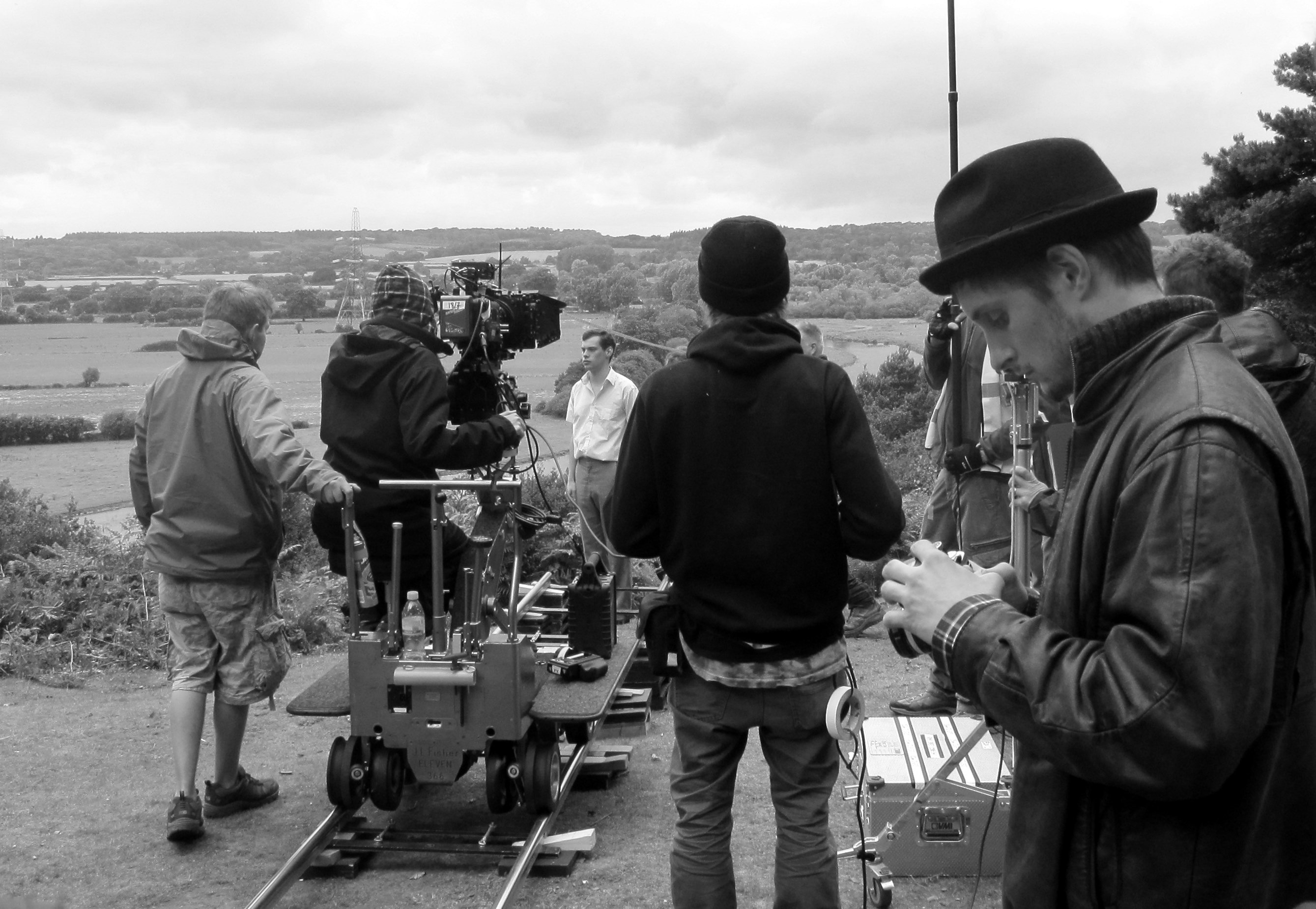
Cinematographer Annika Summerson and crew set up shot with Harry Kershaw (centre) who plays young RUFUS STONE

 Watch the film here:  https://vimeo.com/109360805

Saturday, 7 September 2013

A short reading list for Arts-based Research

I have been using Academia.edu recently to upload my writing to the net.  I have found the response to this very satisfying.  For example, my unpublished PhD Thesis, which remained more or less in oblivion on my personal website for over a decade, now has had more than 275 views since I uploaded it on Academia.edu.

All on one site, I can keep up with numbers of views, where viewers are coming from and what keywords happen to land people on a specific paper.

I have, therefore, changed the URLs in the sidebar Reading List here to direct readers to the Academia.edu version.

Below I offer a short list of my papers over time that were central to developing Performative Social Science, or the use of tools from the arts and humanities in carrying out and/or disseminating social science research.


Saturday, 24 August 2013

"Abandon normal instruments!" The Blogosphere: creative solutions to reaching bigger audiences


How does blogging help to maximize impact and open up new opportunities to disseminate research? Rebecca Edwards asked Kip Jones for his comments on a recent blog about the HSC ReThink Project that was featured in the widely read and prestigious LSE Impact of Social Sciences blog. How do blogging and social networking raise the game for academics and how can others at BU benefit from Jones’ experience on these platforms?


BECCA: Why did you decide to write about HSC’s “Big ReThink Project” on a public forum?

KIP: Gail Thomas and I initially wrote up HSC’s “Big ReThink Project” as an academic paper. I then began by shopping it around to various journals, more than a year ago. Too many of us have had the experience, I am afraid, of no response at all or waiting for months and then having to ask for a response from a journal editor. Generally, the answer at that point is often to submit the article for review, but it will be yet another six months to a year until possible publication. This is no longer acceptable in the world of rapid, electronic communication today. Since our Project itself was about alternative approaches anyway, I asked Gail what she thought about putting it up on a blog instead; her reply, ‘Go for it!’

BECCA: How did you get the article published on the LSE Impact of Social Sciences blog?

KIP: Some time ago now, Mark Carrigan, who was then editor of the London School of Economics & Political Science Impact of Social Sciences blog, asked me to contribute to their ‘Five minutes with …’ series. This invitation came out of the blue, but I think it was because he was aware of our film, Rufus Stone, and had read and heard about it on the Internet.  I was also asked to participate on a panel at LSE in their Beyond the Book series of seminars around the same time. I kept in touch with Mark following the initial LSE blog publication through Twitter and his own personal blog. I think it is particularly important to develop and maintain relationships, even though they are often completely virtual ones. When Gail and I decided to find a blog to publish our piece, I asked Mark whom I should now contact at LSE, and he recommended Sierra Williams. I sent Sierra the Abstract. She responded that the article would indeed be of interest, but it needed to be shorter and a bit less formal in style, and with pictures if possible. I subsequently edited it down to about half its original length—keeping the inspirational bit, with less of the outcomes of the Project. It was published on 16 August as “Bournemouth’s ‘Big ReThink’ Project: An Arts-based Model for Change in a University”.

BECCA: What has been the reaction to your article being published on the LSE Impact Blog?
Who has responded to the article on social media channels?

KIP: In just the first few days since publication, it has received attention through Twitter and Facebook, with links to other sites through pingbacks, retweets, Likes, and Shares. The link was also circulated globally on The Weekly Qualitative Report site and e-newsletter. Early responses have been from scholars, particularly in the social sciences, arts and education, and the PhD student online community.

BECCA: More generally, why do you find blogging a useful engagement exercise? How does it strengthen your academic credentials?

KIP: In addition to making periodic contributions to the BU Research blog, I maintain two blogs of my own: Rufus Stone the movie and KIPWORLD.  The Rufus Stone blog was set up before the film was made, so it is a good repository of the story behind the research that went into making the film and the production of the film itself. Pages on the blog are now heavily externally linked in articles, books and on other websites.  These days, current contributions are more about dissemination, the film’s continuing impact and future plans for screenings and trainings using the film.  

KIPWORLD is my personal blog where I write about projects that I am working on, but I also use it to develop my writing. A good example is a piece entitled, “How Breakthroughs Come: Tenacity and Perseverance”. First written for the blog over six months ago, it was recently reworked and now includes some reader responses to the earlier version. Through a Twitter connection, it has just been published for a third time on the Social Research Hub, a site particularly aimed at PhD students in the Social Sciences.

The early development of the background story for Rufus Stone was also carried out on KIPWORLD. I have recently written about this particular deviation from more traditional academic prose in an article, ‘Infusing Biography with thePersonal: Writing Rufus Stone’ for Creative Approaches to Research, which published on the same day as the LSE blog and has kept me quite busy on Twitter!

I average about one blog article a month of around 1,000 words in length for KIPWORLD. These are definitely not more typical ‘off-the-cuff’ or ‘stream of consciousness’ blogs, however!  I pore over and rework these pieces, sometimes for days, even weeks.

We are very much in a transitional phase in academic publishing and dissemination, brought about by the Open Access debates, etc. The power balance between academics and publishers is shifting and it is a good time to assert our case for more control over our outputs, how (and when) they are published and how accessible they are. Using the alternative of diverse outlets through weblogs, (both personal and more established), contributes to the potential of different methods of reaching wider audiences with our work, having it seen and, eventually, making a difference.

I will end by adding that writing a blog post can be just a first step; this needs to be followed up by links through social media and additional outlets in order to generate reach and insure impact! The ReThink Project reminded us that initiative and individual excellence are nurtured in small communities that support independence and autonomy. A centralised vision of the few may produce followers, but not leaders, and certainly not innovators in my experience.

“Abandon normal instruments”—Brian Eno & Peter Schmidt, Oblique Strategies

'Obiquity' by John Kay from the School of Life: worth a listen!


UPDATE:  

ReThink blog Goes Viral 

Sunday, 8th Sept 2013 

In less than two weeks, a report on Bournemouth University's arts-based model for change, the Big ReThink Project has gone "viral", averaging 100 views a day in just its first 20 days. The blog appeared on London School of Economics and Political Science prestigious Social Science Impact Blog on 16 August.

The article highlights a large, long-term project addressing staff concerns in Bournemouth's School of Health & Social Care, written by Dr Kip Jones, Reader and Prof Gail Thomas, Dean of the School. The project used a unique arts-based approach to change management to engage staff in the process.

As of today, the ReThink Project is currently 5th in the list of the past month’s twenty most popular London School of Economics Impact Blog posts by readership. The current number of views as of today is at 3400+ and continuing to rise.

Links to the LSE blog were initially circulated internationally by The Qualitative Report and news groups such as Performative SocSci, Auto-ethnography, ArtNet, Society for Qualitative Inquiry in Psychology, and Qualitative Research for the Human Sciences .

Pat Thomson, Professor in Arts Education, Creativity and Writing Research at the University of Nottingham then blogged her thoughts on the project on her own blog, Patter, commenting, "The process was not only novel but also seemed to me that it would be highly pleasurable to do".

 
The LSE blog has been highlighted on Active Learning in Higher Education and Creatively Teaching: Arts Education as well.

An article about the viral performance of the blog was published on the web-based Dorset Eye.

The ReThink blog was also highlighted on Sport Balla Trending News and repeated on Alpa Galileo media news.

Links to the Big ReThink blog have been circulating on many social media groups, including Twitter and Facebook and continue to raise interest in Bournemouth University's ReThink Project.
As of 7 October 2013, according to Google Analytics, the Bournemouth Big Rethink Project post has received 3,956 views.